


Download the PDF: English | French
ACAT-France, CCFD-Terre Solidaire, FIDH, Info Birmanie, and Justice For Myanmar, denounce Thales's exports of Coast Watcher radar systems to the Myanmar junta, in disregard of European restrictive measures. We call for an end to these exports and to the maintenance of previously exported equipment, as well as for the French government, its European partners and parliamentarians to take action to ensure the effective and concrete implementation of European sanctions.
Myanmar has been ruled by a military junta for decades, accused of numerous human rights violations against the country’s ethnic minorities and of genocide against the Rohingya, including during the period of political opening from 2013 to 2021. Following the coup on 1 February 2021, the army is at war against its own people. The European Union’s restrictive measures have evolved in line with the political situation in Myanmar but have never been fully lifted. The Myanmar junta has been subject to European sanctions since the 1990s[1], which prohibit the export of arms, military and auxiliary equipment, as well as their maintenance.
The investigation published by Disclose and Info Birmanie on 17 May 2026: “Thales supplied surveillance radars to the Burmese army as Rohingya were being slaughtered”, reports on the direct sale of maritime surveillance radars between Thales – in which the French state is a shareholder – and the Burmese junta between 2017 and 2020, totalling 16 million euros. However shocking these revelations may be from an ethical and legal standpoint, they are part of a long-standing relationship between Thales and the Myanmar junta.
Since 2015, the Dutch organisation Stop Wapenhandel (Stop the Arms Trade) has been denouncing the sale of RAWL-02 radar systems by Bharat Electronics Ltd (BEL). The system is based on technology that Thales sold to BEL[2], an Indian company with which Thales had set up a joint venture, BEL-Thales Systems Limited (BTSL). The Dutch Ministers for Foreign Affairs and for Foreign Trade and Development Cooperation were subsequently questioned by an MP and stated that the export licence did not permit BEL to re-export licensed radars without authorisation, pointing out that the absence of a requirement for prior authorisation in the event of re-export constituted a breach of contract.[3]
In June 2021, Justice For Myanmar published an investigation into BEL; Thales is implicated once again: via BEL and “Thales has also transferred radar equipment to Myanmar, according to information received by Justice For Myanmar”.[4]
Info Birmanie, Justice For Myanmar, Reporters Without Borders (RSF) and Sherpa[5] have called on Thales to account for this indirect support for the junta. Taking advantage of the lack of clarity surrounding exports via its Indian partner, the company claims that: “Thales is not involved, either directly or indirectly, in any exports of controlled technologies or military equipment to Myanmar in the context of its dealings with the Indian companies concerned, and does not breach any applicable regulations in this regard.”
In December 2021, The New York Times and Justice for Myanmar published an investigation[6][7] into the Burmese-Irish “crony”[8] family of Kyaw Taung, reporting on a meeting organised by one of their companies – Ky Tha – with Burmese navy officials and representatives from Thales to “discuss the implementation of the contract” and “continue to move forward with the contract” for the Coast Watcher 100 in September 2017 – in the midst of a wave of violence against the Rohingya minority.
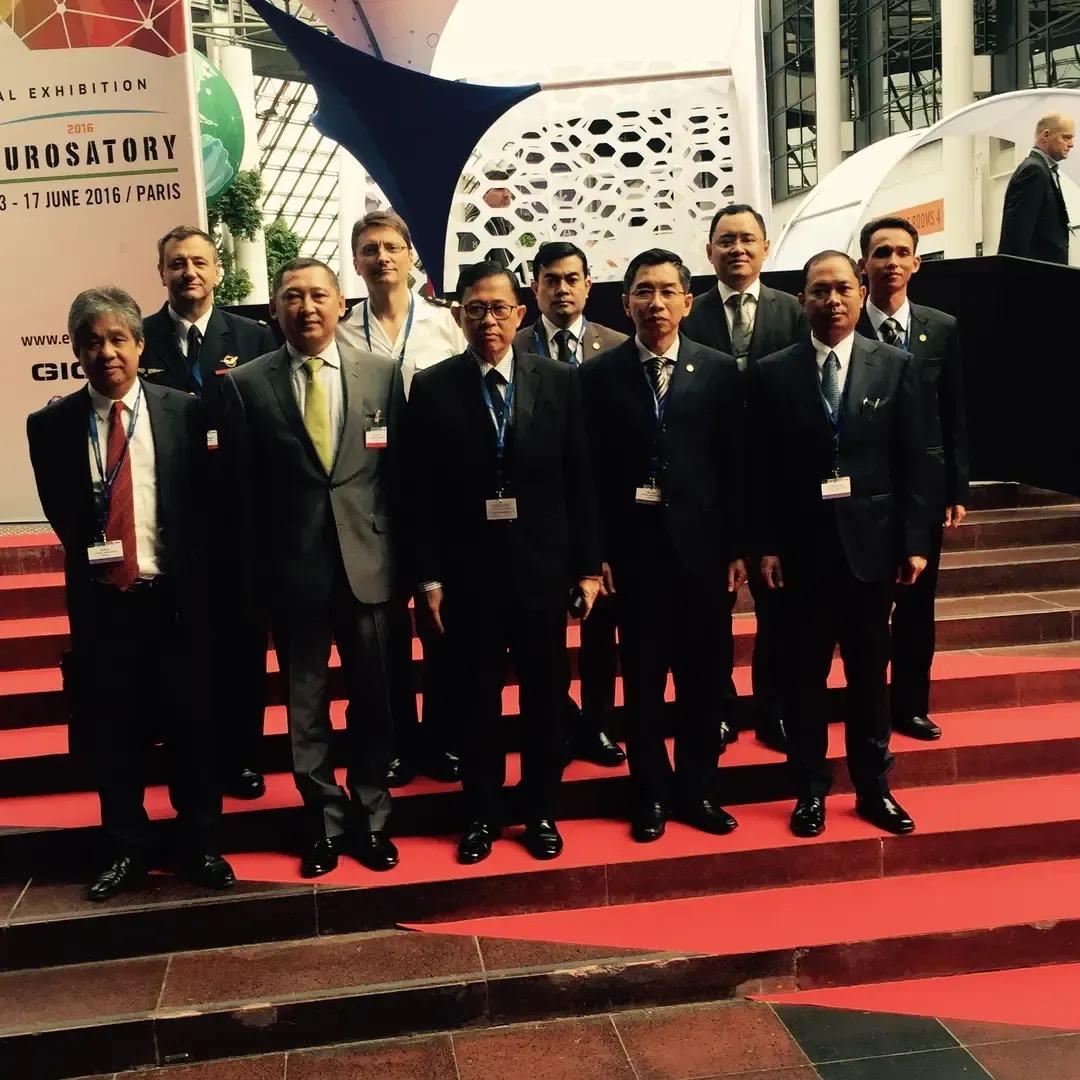
At that time, Ky-Tha’s staff included a French employee with an extensive network: Thierry Poignant. A former civil servant at the French Embassy in Yangon, he served as Managing Director at Ky-Tha from September 2016 to November 2017, before joining Thales, where he is now Director of Strategic and International Planning. Moreover, in June 2016, while still a civil servant for the French government – according to his LinkedIn profile[9] – he was already accompanying a delegation from the Myanmar junta and Ky Tha to the Eurosatory defence exhibition near Paris.
In September 2025, Follow The Money, in collaboration with Justice for Myanmar,[10] published an investigation into the ‘Great Firewall’ developed by the Chinese company Geedge Networks, which is reportedly used by the Myanmar junta and is said to rely on software from Thales. According to this investigation, in 2024, the Myanmar junta held licences for at least one flagship product: Tiangou Secure Gateways, which licenses “do not function without Thales software”.[11] The impact of this software on thousands of Myanmar internet users, activists and journalists is very real, involving in particular the blocking of VPNs and the ability to launch attacks against websites.
At this stage, the various revelations and investigations have not prompted any public response from the French government, nor have they led to any scrutiny of Thales’s activities. The publication of a Thales invoice for over €9 million addressed to the Myanmar army – General Directorate of the Commander-in-Chief’s (Army) Procurement Office – and its intermediary – Ky-Tha Industrial Development Company LTD – changes the game and establishes a direct link.
The Myanmar navy did not have to wait until the post-coup era to be implicated in the junta’s war crimes. Its involvement has been documented in the genocide of the Rohingya,[12] as well as in the imposition of blockades on humanitarian aid and goods, and fishing bans that are starving the population.[13] A technique of collective and indiscriminate punishment regularly used by the junta, which it calls the ‘four cuts’ strategy, was again condemned by the UN in 2025 as leading to a situation in Rakhine State “on the brink of famine”.[14]
Legal context
In light of the extensive documentation of crimes committed by the Myanmar military, a 2019 report by the Human Rights Council’s Independent International Fact-Finding Mission on Myanmar concerning the economic interests of the Myanmar military supports the view that the sale of arms or military equipment amounts to complicity: “Many of these companies and States therefore knew, or ought to have known, that their arms transfers could have a direct and reasonably foreseeable impact on the human rights situation in Myanmar. Among the arms suppliers identified by the Mission, 12 companies are State-owned enterprises”.[15]
At the international level, one of the fundamental principles of the United Nations Guiding Principles on Business and Human Rights[16] is that every business has a duty to respect human rights in the course of its activities. In situations of armed conflict, businesses must also comply with the rules of international humanitarian law. Failure to do so exposes both individuals and the business itself to risks of criminal and civil liability. This responsibility for due diligence and the protection of human rights rests not only with businesses, but also with states.
The UN Guiding Principles further emphasise that businesses must exercise due diligence throughout their value chain. This approach aims to identify the risks and human rights abuses that they may cause, contribute to or be linked to as a result of their business relationships, including with regard to the end use of their products.
These same expectations are also reflected in the Organisation for Economic Co-operation and Development (OECD) Guidelines for Multinational Enterprises, which have been in place since 2011[17] and were strengthened in 2023.[18]
The Myanmar junta has been subject to European sanctions since the 1990s.[19] Whilst the regulations have evolved over time, the embargo on the supply of arms to the Myanmar junta has never been lifted. The 2013 regulation, for example, prohibited “to provide technical assistance related to military activities and to the provision, manufacture, maintenance and use of arms and related materiel of all types” or the supply of “equipment which might be used for internal repression”.[20]
These terms were reinforced by Regulation 2018/647, which stipulates that “Where the end-user is the Myanmar's/Burma's military, any dual-use goods and technology procured by it shall be deemed to be for military use”. [21]
In addition to international frameworks, Thales is also subject to the 2017 French law on the duty of vigilance. This legislation imposes a proactive obligation on Thales to identify risks of human rights abuses, implement appropriate measures to mitigate them, and remedy any harm caused. Although as early as 2018, the “Group” identified export controls and economic sanctions as a legal risk, no mention of this is made in its due diligence plan.[22]
France’s choice of powerlessness, imposed on the European Union
Despite the growing number of cases and legal frameworks, as mentioned above, and despite the State’s stake in Thales – which could be seen as a further guarantee of compliance with the existing legal framework – the ‘Group’ has not yet come under scrutiny.
In France, unlike in other European countries, civil society cannot act as a civil party in cases of violations of European sanctions.
In 2006, the government introduced a bill known as the “embargo” bill,[23] which was intended to incorporate violations of European restrictive measures into the French Penal Code. Twenty years later, this now-outdated bill never made it to the Senate. In April 2024, Directive 1226[24] of the European Parliament and of the Council, which specifies the minimum penalties for violations of restrictive measures, required Member States to transpose this directive into national law within one year. As of now, the directive has still not been transposed into French law, even though the transposition deadline—May 20, 2025—has long since passed.
Although a parliamentary commission was established in 2023 to evaluate the government’s policy on the export of military equipment,[25] it has not yet produced any reports or held any public hearings.
As the situation in Myanmar continues to deteriorate, the European Union’s restrictive measures against Myanmar were renewed at the end of April, with no new provisions added. This is baffling, especially given that so-called “crony” companies—such as Ky Tha—remain unsanctioned. But what this case demonstrates above all is the urgent need for France and the EU to wake up to the mechanisms for enforcing sanctions. If the European Union decides on sanctions, each member state is responsible for ensuring their compliance and effective implementation—a point that the French government seems to be deliberately ignoring in favor of its position as a shareholder in Thales and despite its diplomatic stances.
We are calling
● Thales' unions and employees
Submit large numbers of reports—which may be anonymous—through Thales’ internal platform, Thales Alert Lines, regarding violations of human rights and fundamental freedoms and compliance with trade regulations.
Raise these issues with company leadership regarding sales to an authoritarian regime subject to European sanctions, specifically the Strategic and CSR Committee and the Risk Management Committee.
● Thales and its shareholders
Commit to ceasing all sales to or in connection with the Myanmar military, including the maintenance and updating of operating software for devices previously sold, whether directly or indirectly (for example, through its joint venture BEL-Thales Systems Limited (BTSL)).
Develop and implement a due diligence plan that incorporates the potential misuse of the group’s equipment or services as a risk. This is to prevent the risk of serious violations of human rights and fundamental freedoms that may result from the misuse of its equipment and services.
As stipulated in the United Nations Guiding Principles on Business and Human Rights and their “protect, respect, and remedy” framework, Thales must acknowledge the negative impacts of these sales to the Myanmar military and provide for remedial measures for the victims, particularly the Rohingya population.
● the French government
Launch an investigation into non-compliance with European sanctions pursuant to Article 459 of the Customs Code and any other relevant legislation.
Transpose Directive (EU) 2024/1226 of the European Parliament and of the Council of April 24, 2024, on the definition of criminal offenses and penalties for violations of Union restrictive measures.
As a State Party to the Rome Statute, France must refer the situation in Myanmar to the Prosecutor of the International Criminal Court pursuant to Article 14 of the Rome Statute.
● French lawmakers
The parliamentary committee tasked with evaluating the government’s policy on the export of military equipment and related materials, the transfer of defense-related products, and the export and transfer of dual-use goods; to convene and hold several hearings to shed full light on these exports and the French government’s involvement.
The Foreign Affairs Committee to investigate the effectiveness of the implementation of European sanctions and the opaque system of exemptions, notably through hearings, in order to bring about the necessary legislative changes.
All French parliamentarians to question the government on the many issues raised by this investigation. For example: the mechanisms that allowed such exports, which contradict France’s diplomatic position; the due diligence carried out by the State Holdings Agency; the existence—or lack thereof—of exemptions from European sanctions on Myanmar that benefit French companies; and the liabilities and reparations for which Thales could be held accountable.
● The European Union
Impose sanctions on Ky Tha and the KT Group, the two main conglomerates owned by the Kyaw Thaung family, as well as their executives.
Reinstate the ban on issuing entry visas to senior officials of the junta, the military, or the security forces, as established in 1996 by the Council’s Common Position (96/635/CFSP). This measure was further expanded in 2003 “the scope of the visa ban and assets freeze should be extended to include further members of the military regime, the military and security forces, the military regime's economic interests and other individuals, groups, undertakings or entities associated with the military regime who formulate, implement or benefit from policies that impede Burma/Myanmar's transition to democracy and their families and associates”.[26]
The presence of a high-ranking Myanmar military official at the Eurosatory defense exhibition in 2016 underscores the need for this ban, which is not a given for all European Union member states.
Publish, in accordance with Article 15 of the Treaty on the Functioning of the European Union, the exemptions from restrictive measures granted by Member States in order to enhance the transparency and effectiveness of sanctions monitoring at the European level.
Make it possible for civil society organizations to file complaints with European authorities in cases of suspected sanctions circumvention.
● The Independent Investigative Mechanism for Myanmar
To fully exercise his mandate to document and analyze the role of companies in cases where their activities may have contributed to the commission of international crimes and serious violations of international law in Myanmar.
● The United Nations Security Council
Refer the situation in Burma to the Prosecutor of the International Criminal Court by adopting a resolution invoking the powers provided for in Chapter VII to refer the situation in Burma to the International Criminal Court.
Adopt a resolution establishing a general and comprehensive embargo on arms and military equipment destined for Burma.
Endnotes
[1] Common position defined by the Council on the basis of Article J.2 of the Treaty on European Union, on Burma/Myanmar (96/635/CFSP) | European Union law (1996, 28 October)
[2] Despite military embargo, India sells Dutch radar technology to Myanmar | Stop Wapenhandel. (2015, 6 Jully)
[3] Kamervragen (Aanhangsel) 2015-2016, nr. 79 | Overheid.nl > Officiële bekendmakingen (2015, 22 September)
[4] Bharat Electronics Limited supplying technology to Myanmar since attempted military coup | Justice For Myanmar (2021, 14 June)
[5] Civil society calls on Thales to put an end to suspected indirect support to the Myanmar junta | Info Birmanie, Justice For Myanmar, Reporters sans frontières (RSF), Sherpa (2021, 30 November)
[6] The Kyaw Thaung family’s business with the Myanmar military | Justice For Myanmar (2021, 25 December)
[7] Worldly, Charming, and Quietly Equipping a Brutal Military | The New York Times (2021, 24 December)
[8] The ‘cronies’, or ‘crowned heads’, refer to a small number of Myanmar families who own business conglomerates and have grown rich alongside the Myanmar military. This economic elite is essential to the survival of the military junta, providing it with financial, economic and material resources.
[9] Linkedin profile of Thierry Poignant | Disclose ( archived in 2021)
[10] China exports censorship tech to authoritarian regimes – aided by EU firms | Follow The Money (2025, 11 September)
[11] “Documents analysed during the investigation also indicate that licenses for the "Tiangou Secure Gateway" don't work without Thales' software”
China exports censorship tech to authoritarian regimes – aided by EU firms | Follow The Money (2025, 11 September)
[12] Myanmar’s armed forces and the Rohingya crisis | USIP (2018)
[13] Starving to death: the latest phase of the Rohingya genocide | BROUK (2025, juin)
Banned From Boats in Myanmar, Rohingya Fish on Rafts of Junk | VOA (2017, 24 janvier)
[14] A third of Myanmar’s population faces food insecurity: UN human rights experts | OHCHR (2025, 13 mars)
[15] The economic interests of the Myanmar military ; Independent International Fact-Finding Mission on Myanmar | Human Rights Council (2019, September)
[16] Guiding Principles on Business and Human Rights: Implementing the United Nations “Protect, Respect and Remedy” Framework | Office of the United Nations High Commissioner for Human Rights (2011)
[17]OECD Guidelines for Multinational Enterprises | OECD (2011)
[18] OECD Guidelines for Multinational Enterprises on Responsible Business Conduct | OECD (2023)
[19] The EU's relations with Burma / Myanmar | DG RELEX, European Commission (2004)
[20] Council Regulation (EU) No 401/2013 concerning restrictive measures in respect of Myanmar/Burma and repealing Regulation (EC) No 194/2008 | European Union law (2013, May)
[21] Council Regulation (EU) 2018/647 amending Regulation (EU) No 401/2013 concerning restrictive measures in respect of Myanmar/Burma | European Union law (2018, 26 April)
[22] 2017 Annual Report and Prospectus, including the annual financial report, section 1.1.2.2: Legal risks | Thales (2017)
[23] Embargoes and other restrictive measures | French Senate (2006, 21 February)
[24] Directive (EU) 2024/1226 of the European Parliament and of the Council on the definition of criminal offences and penalties for the violation of Union restrictive measures and amending Directive (EU) 2018/1673 | European Union law (2024, 24 April)
[25] “The parliamentary committee tasked with reviewing the government’s policy on the export of military equipment has appointed Senator Cédric Perrin as its chair”, Press release | Senate (16 January 2025)
[26] Council Common Position 2003/297/CFSP on Burma/Myanmar | European Union law (2003, 28 April)
